
Local Plan Main Modifications Consultation
Policy 42: World Heritage Sites
| Local Plan page number | Policy or paragraph Local Plan | Proposed Change | Justification |
|---|---|---|---|
| 136 | Policy 42: Criterion 1 |
Policy 42 World Heritage Sites [removed] The Frontiers of the Roman Empire (Hadrian's Wall) World Heritage Site [added] 1. Development affecting the Frontiers of the Roman Empire (Hadrian’s Wall) World Heritage Site, as shown on the Policy Map, will be encouraged to [removed] should [added] conserve, promote, and enhance its Outstanding Universal Value, including the authenticity, integrity, and significance of its attributes, and support its management and protection. |
Effective Consistent with national policy |
| 136 | Policy 42: Criterion 3 | 3. Development likely to have an impact on the Frontiers of the Roman Empire (Hadrian’s Wall) [added] World Heritage Site or its setting will be permitted only where it can be demonstrated that the scheme will conserve those elements which contribute towards its o [removed] O[added]utstanding u[removed] U[added]niversal v [removed] V[added]alue. | Effective |
| 136 | Policy 42: Paragraph 12.16 |
Arbeia, South Shields' Roman Fort, guarded the main sea route to Hadrian's Wall. It was a key garrison and military supply base to other forts along the Wall. It is an important part of the history of Roman Britain and makes a significant contribution to the Outstanding Universal Value of the World Heritage Site. [added] |
Effective |
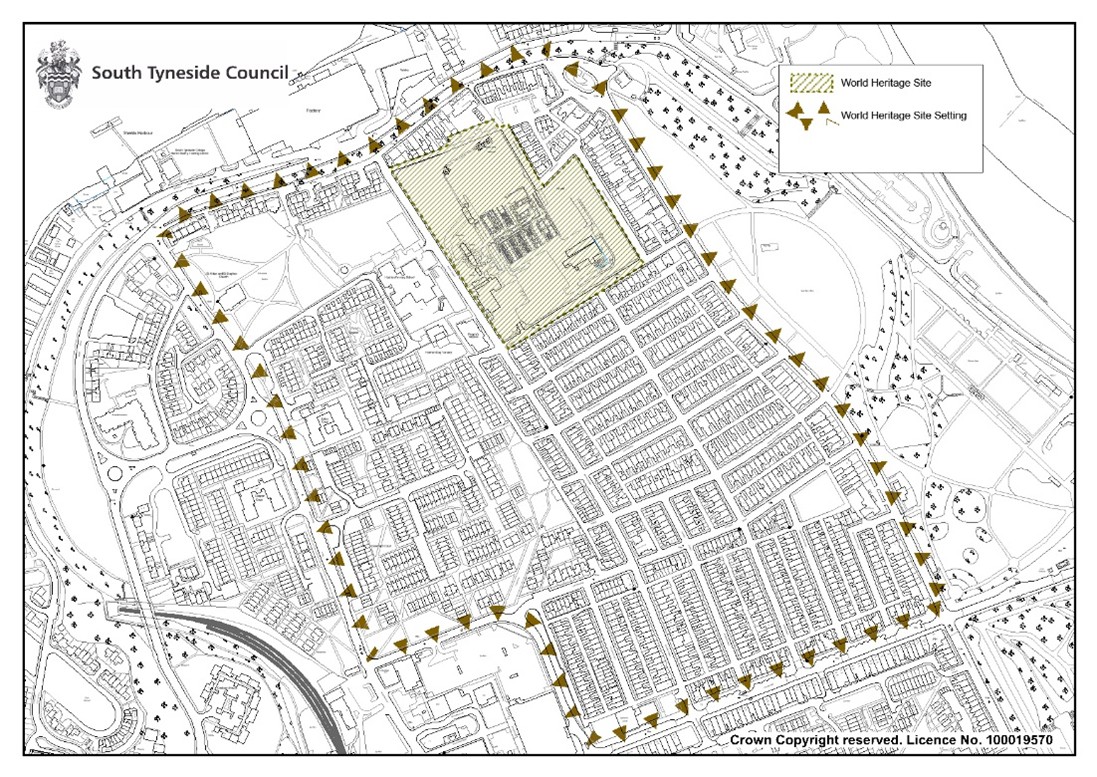
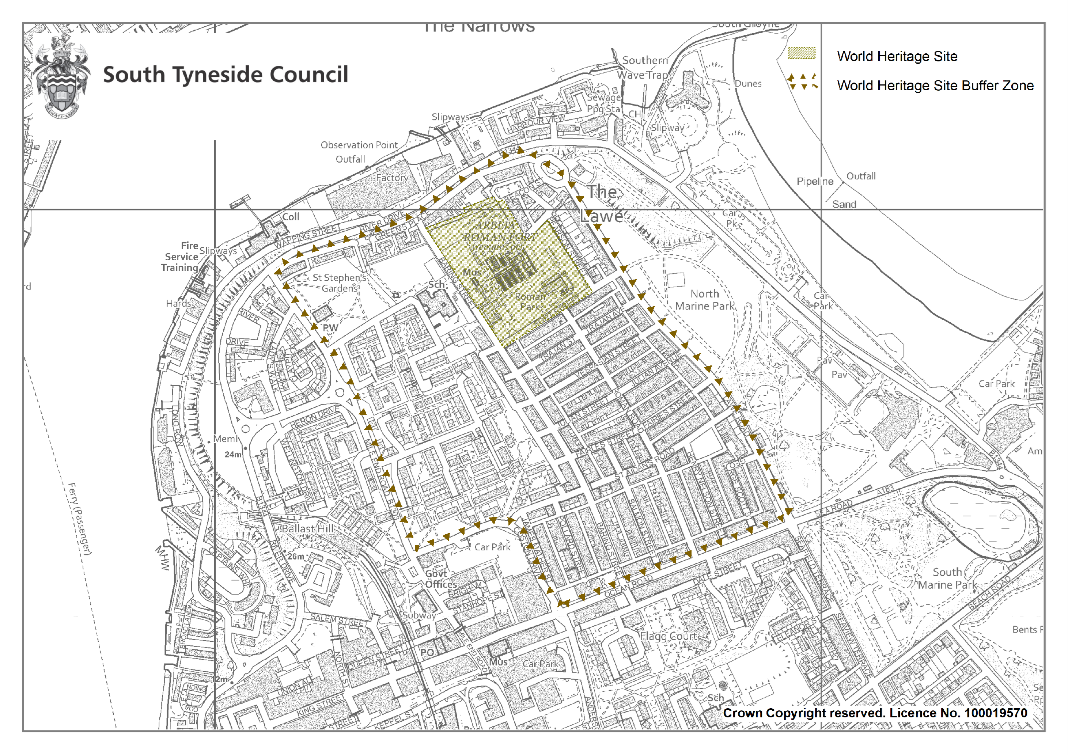
| 136 | Inset Map 31 |
Arbeia World Heritage Site (WHS) World Heritage Site setting [removed] Buffer Zone [added]
[removed]
[added]
|
Effective |
What to consider when making a representation
What are the tests of soundness and legal compliance?
The purpose of the examination is to consider whether the local plan complies with relevant legal requirements for producing local plans, including the duty to cooperate, and meets the national tests of ‘soundness’ for local plans set out in the National Planning Policy Framework (NPPF).
Therefore, representations submitted at this stage must only be made on these grounds and, where relevant, be supported with evidence to demonstrate why these tests have not been met.
Legal compliance
To be legally compliant the plan has to be prepared in accordance with the duty to cooperate and legal and procedural requirements, including the 2011 Localism Act and Town and County Planning (Local Planning) (England) Regulations 2012 (as amended).
Soundness
The inspector conducting the examination in public has to be satisfied that the local plan is ‘sound’; namely that it is:
• Positively prepared – the plan should be prepared based on a strategy which seeks to meet objectively assessed development and infrastructure requirements, including unmet requirements from neighbouring authorities where it is reasonable to do so and consistent with achieving sustainable development.
• Justified – the plan should be the most appropriate strategy, when considered against the reasonable alternatives, based on proportionate evidence.
• Effective – the plan should be deliverable over its period and based on effective joint working on cross-boundary strategic priorities, and
• Consistent with national policy – the plan should enable the delivery of sustainable development in accordance with the policies in the NPPF.